


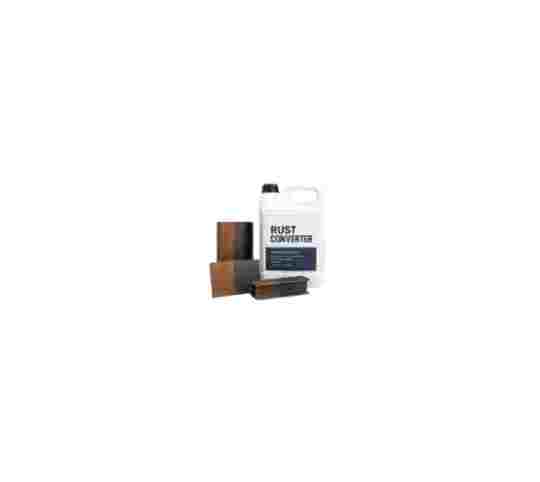
Rust Converter
Water Based Rust Converter from Alvina for treating rusted steel and iron before recoating. Industrial corrosion treatment supplied across UAE and GCC.
Water Based Rust Converter | Industrial Rust Treatment Supplier
The Water Based Rust Converter is a practical chemical treatment for rusted iron and steel surfaces during maintenance, refurbishment and recoating work. Rather than simply covering corrosion, the formulation reacts with suitable remaining iron oxide and changes it into a more stable converted layer. This helps prepare the treated area for a compatible protective coating when required. It can be used for suitable steel structures, machinery, pipes, tanks, frames, gates, fabrication components and general industrial maintenance. Loose rust, scale, grease and contamination should be removed before treatment, while application rate and curing time should follow the manufacturer's technical instructions. Alvina supplies rust-treatment and corrosion-control products across UAE, Abu Dhabi, Dubai, Sharjah, Saudi Arabia, Riyadh, Jeddah, Dammam, Qatar, Bahrain, Kuwait and Oman. For project use, check the current technical data sheet and safety data sheet for exact application, coverage, storage and coating-compatibility information.
Water Based Rust Converter for Industrial Metal Protection
Water Based Rust Converter rarely stays where it starts. Once corrosion develops on exposed steel or iron, it can spread beneath coatings and make later maintenance more difficult. Removing every trace of corrosion mechanically is also not practical on many structures, especially around joints, corners, pipes and installed equipment.
A Water Based Rust Converter provides another approach to surface preparation. It reacts with existing iron oxide and changes the unstable rust layer into a more stable surface. After proper curing, the treated metal can be prepared for a compatible protective coating according to the product instructions.
This type of Rust Treatment Solution is useful during industrial maintenance, repair work and refurbishment of ferrous metal surfaces. Alvina supplies rust-treatment and corrosion-control products across the UAE and GCC, including Abu Dhabi, Dubai, Sharjah, Saudi Arabia, Riyadh, Jeddah, Dammam, Qatar, Bahrain, Kuwait and Oman.
What is a Water Based Rust Converter?
A rust converter is a chemical surface-treatment product used on rusted iron and steel. Unlike a conventional rust remover that aims to dissolve or strip corrosion completely, a converter chemically reacts with the remaining rust.
Before treatment, loose scale, dirt, grease and poorly attached rust should be removed. The liquid is then applied to the prepared rusty surface. As the chemical reaction takes place, the appearance of the treated area normally changes and a more stable converted layer forms.
The exact reaction, drying time, coverage and final appearance depend on the formulation. Therefore, the manufacturer’s technical data sheet should always guide application.
A water-based formulation can be particularly convenient for maintenance work because water acts as the primary carrier rather than a conventional solvent-heavy base.
Key Features of Water Based Rust Converter
- Rust conversion: Reacts with existing corrosion on suitable iron and steel surfaces.
- Water-based formulation: Uses a water-based carrier system for practical industrial application.
- Surface preparation: Helps prepare rusted metal before a compatible protective coating is applied.
- Direct treatment: Reaches irregular surfaces, corners and areas where complete mechanical rust removal can be difficult.
- Maintenance use: Works well for repair, refurbishment and corrosion-maintenance jobs.
- Ferrous metal application: Intended primarily for suitable iron and steel surfaces affected by rust.
- Brush-friendly application: Many converter formulations can be applied to prepared surfaces using a brush or other specified method.
- Coating preparation: The converted surface can form part of a subsequent protective coating system when the manufacturer permits it.
Uses of Water Based Rust Converter
- Steel Structures: Treats remaining rust during structural steel maintenance.
- Pipelines: Helps prepare accessible corroded pipe surfaces for maintenance coating.
- Storage Tanks: Treats suitable external rusted areas before repainting.
- Machinery: Supports refurbishment of corroded ferrous machine components.
- Metal Frames: Converts surface rust before the application of a compatible coating.
- Fences and Gates: Provides a practical treatment for weathered iron and steel surfaces.
- Maintenance Equipment: Helps restore rusted metal items during scheduled maintenance.
- Industrial Fabrication: Treats rust that develops on suitable steel surfaces before finishing.
Applications Across UAE and GCC
- Abu Dhabi: Useful for steel maintenance, industrial plants, workshops and suitable oil and gas support facilities.
- Dubai: Applied during metal refurbishment, facility maintenance and industrial repair projects.
- Sharjah: Suitable for fabrication shops, workshops, warehouses and steel maintenance operations.
- Saudi Arabia: Used for industrial corrosion maintenance on suitable iron and steel surfaces.
- Riyadh: Useful for structural steel, machinery, equipment and general facility-maintenance work.
- Jeddah: Can support corrosion-control programs where metal faces coastal and humid conditions.
- Dammam: Suitable for industrial facilities, workshops, pipe maintenance and steel structures in coastal environments.
- Qatar: Used during steel maintenance and refurbishment in industrial and commercial facilities.
- Bahrain: Suitable for metal-maintenance work where moisture and coastal exposure contribute to corrosion.
- Kuwait: Used for maintenance of suitable steel structures, equipment and industrial components.
- Oman: Applicable to workshops, industrial sites and suitable steel maintenance projects.
Technical Specifications – Water Based Rust Converter
| Specification | Details |
|---|---|
| Product Name | Rust Converter |
| Product Type | Water Based Rust Converter |
| Form | Liquid |
| Base | Water Based |
| Primary Function | Rust Conversion and Surface Passivation |
| Recommended Substrate | Rusted Iron and Ferrous Steel Surfaces |
| Application | Industrial Corrosion Treatment and Surface Preparation |
| Surface Condition | Firmly Adhering Rust After Removal of Loose Scale and Contamination |
| Application Method | Brush, Roller or Spray, subject to product TDS |
| Surface Preparation | Remove Loose Rust, Scale, Oil, Grease, Dirt and Dust Before Application |
| Rust Conversion | Converts Adherent Iron Oxide into a More Stable Surface Layer |
| Recoating | Suitable for Compatible Protective Coatings After Required Reaction/Curing Time |
| Cleaning | Water while product is still wet, where permitted by manufacturer instructions |
| Typical Use Areas | Steel Structures, Pipes, Tanks, Machinery, Frames and Industrial Equipment |
| Storage | Keep in Original Sealed Container and Protect from Extreme Heat, Sunlight and Freezing |
| Shelf Life | Refer to Manufacturer TDS |
| Packaging | Available Pack Size to Be Confirmed |
How Does a Rust Converter Work?
The process begins with surface preparation. Loose rust, flaking scale, oil, grease and contamination need to be removed to expose a sound surface for treatment. Once applied, the active ingredients in the converter interact with iron oxides present in the rust layer. Depending on the chemistry of the formulation, this reaction changes the rust into more stable compounds and creates a converted surface.
The material must then receive enough time to react and cure. If a finishing system is required, the next primer or topcoat should only be applied after the specified curing period and after checking coating compatibility. A Rust Conversion Coating should not be treated as a repair for badly weakened steel. Where corrosion has caused significant section loss, cracking or structural damage, the metal condition requires proper engineering assessment.
Standards, Certifications and Compliance
- ISO 12944 – Corrosion Protection of Steel Structures by Protective Paint Systems
- ISO 8501 – Preparation of Steel Substrates Before Application of Paints
- REACH – EU Chemical Regulation
- RoHS – Restriction of Hazardous Substances
These are relevant regulatory and technical references rather than confirmation that this specific product holds each certification. Check the current TDS, SDS and manufacturer declarations for the supplied Rust Converter.
Why Choose Water Based Rust Converter from Alvina?
- Industrial Corrosion Control: Suitable for rust treatment and metal maintenance requirements across different industries.
- Practical Rust Treatment: Helps convert firmly attached rust into a more stable surface before compatible coating work.
- Water-Based Formulation: Provides a practical option for industrial maintenance and refurbishment applications.
- Wide Application Range: Suitable for steel structures, machinery, pipelines, tanks, metal frames and fabrication components.
- Maintenance Friendly: Useful for repair and refurbishment projects where complete mechanical rust removal may be difficult.
- Project Support: Alvina can support customers in selecting suitable corrosion-control solutions according to their application requirements.
- GCC Supply Coverage: Available through Alvina across UAE, Abu Dhabi, Dubai, Sharjah, Saudi Arabia, Riyadh, Jeddah, Dammam, Qatar, Bahrain, Kuwait and Oman
Frequently Asked Questions
1. What is a Water Based Rust Converter?
It is a chemical treatment that reacts with rust on suitable iron and steel surfaces and converts it into a more stable layer.
2. Does a rust converter completely remove rust?
No, it works by chemically converting suitable remaining rust rather than simply removing all corrosion from the surface.
3. Can I apply it directly over oil or grease?
No, clean away oil, grease, dirt and other contamination before applying the treatment.
4. Can I use a rust converter on clean steel?
Rust converters mainly target corroded surfaces, so check the manufacturer’s instructions before applying one to clean steel.
5. Can I paint the metal after treatment?
Yes, when the product instructions permit it, apply a compatible coating after the converter completes its reaction and curing process.
6. Can a rust converter repair severely corroded steel?
A converter treats surface corrosion but cannot restore metal already lost through severe corrosion, so damaged structural components require proper assessment.
7. Where is the product available?
Alvina supplies corrosion-control products across UAE, Saudi Arabia, Qatar, Bahrain, Kuwait and Oman.
Conclusion
A Water Based Rust Converter is useful when maintenance teams need to deal with firmly attached corrosion without relying solely on extensive mechanical removal. It chemically treats the rusted surface and can prepare suitable steel or iron for the next stage of a corrosion-protection system.
Correct preparation remains essential. Loose scale and contamination should come off first, while reaction time and coating compatibility must follow the manufacturer’s instructions.
For structural steel, pipelines, machinery, tanks, metal frames and general maintenance work, the product can provide a practical step between surface preparation and recoating. Alvina supplies industrial rust-treatment and corrosion-control solutions throughout the UAE, Saudi Arabia, Qatar, Bahrain, Kuwait and Oman.


Woman fashion dress
Price : $387But I must explain to you how all this mistaken idedenounc pleasure and praisi pain was born and I will give you a complete accosystem, and expound the actu teachings of the great explore tmaster-builder of human happiness. No one rejects, dislikes, or avoids.